Most Beautiful Villages of Lot France
The Lot Valley, in the south-west of France, is a largely undiscovered part of the country, full of character and charm. Deeply rural and traditional, a trip to this region is like stepping back in time.
The region also boasts six villages which have been awarded the much-coveted title “the Most Beautiful Villages in France”. This is the France you have dreamed of. I promise you won’t want to leave!
Carennac
At the very centre of the village enter into the lovely ‘Court du Prieure’, a little courtyard with the Church of St Pierre on one edge and farm buildings on the other. The tourist office is also here in one of the former apartments of the Deans.
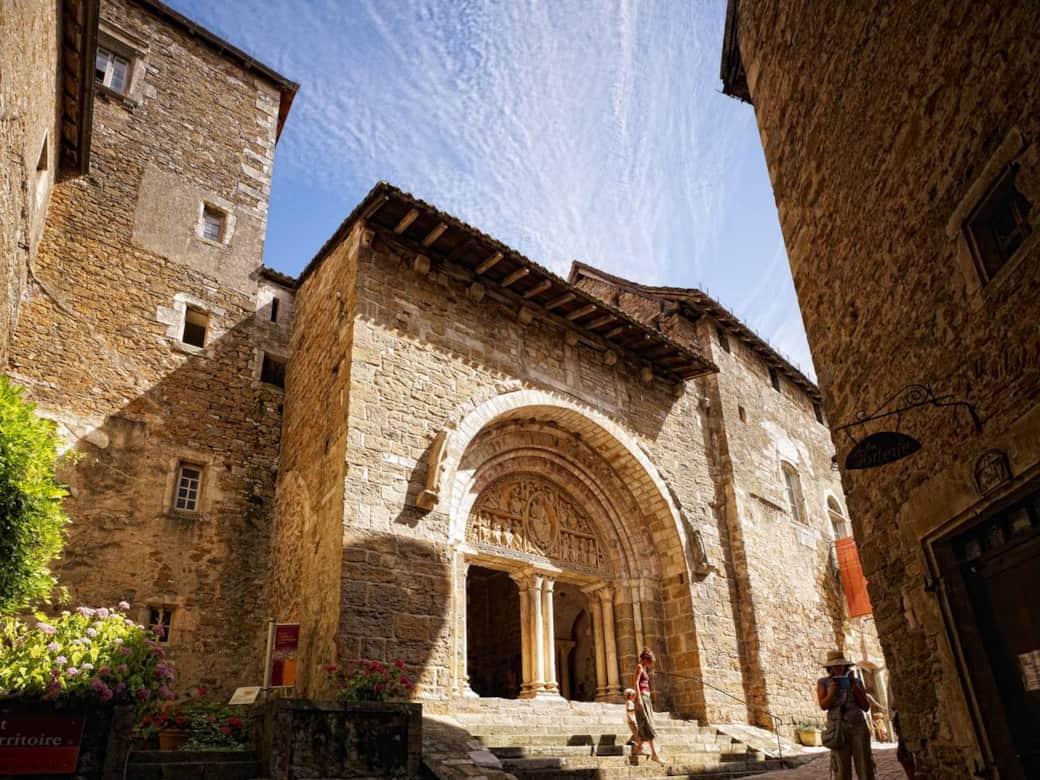
The church has a beautiful carved doorway and inside are some lovely carved capitals and a mural of ‘The Three Dead Kings’.
If you visit the cloister (for a small fee) you will see the famous 15th century sculpture of the Miseau Tombeau. The cloister is half Romanesque and half Gothic and the church and cloister date back to the 11th century. A house with a turret, opposite the church was once the porter’s lodge and provided hospitality for pilgrims on their way to or from Rocamadour.
Carennac’s castle which runs along the edge of the church, was built in the 16th century as were some of the large houses in the village. Inside the castle is a permanent exhibition about the rich architecture and history of Carennac. It also offers an opportunity to enter the castle and admire the lovely painted ceiling of the salle d’apparat (the ceremonial hall).
The streets surrounding Carennac’s Court du Prieure are full of charming 15th and 16th century stone houses and the River Dordogne runs just below the village. Many of the Renaissance houses have beautiful sculpted windows and each one is a bit different to its neighbor, but all built in beautiful local stone with terracotta roofs giving the village a very harmonious feel. Out the other side from the river runs the Hermitage canal, one of the Dordogne’s channels and this too is surrounded by lovely houses.
Carennac always holds its main town festival the first Sunday after August the 15th and this is a good time to visit. Market day is Tuesday afternoon during the summer season, a lovely time to soak up the convivial atmosphere in one of the most beautiful villages in France.
Loubressac
As you wind up the hill to the hilltop village of Loubressac you are greeted by the sight of the lovely stone houses with small flowery gardens, brown terracotta roofs and painted shutters – often in shades of burgundy – delightful! The houses are built in a lovely pale gold, almost white stone. The streets wind upwards to the shady square with its church dating from the 12th to 16th centuries.
As you wander round the village you catch glimpses of the surrounding countryside – the valleys of the rivers Dordogne, Cère and Bave, it offers one of the best views of the Dordogne region including views of the Chateaux Castelnau which is near to Bretenoux and which is one of the great castles of France.
Loubressac does have a chateau but it is almost impossible to see anything of it other than its imposing gateway. The chateau dates from the 15-17th centuries and its maison des gardes to the 15th century.
Loubressac has won the prizes of ‘most beautiful flowering village of the Lot’ and ‘best flowering village of the Midi-Pyrenees’.
Autoire
Despite being a small village, it was once home to the bourgeois of nearby St Ceré and so has some very attractive 16th and 17th century houses built in the local honey coloured stone. The main square in the centre of the village is magnificent with a lovely fountain beautifully decked out in flowers during the summer. Around the edges of the square the lovely stone houses are simply charming. The village has changed remarkably little during the last 800 years and you can easily see why it’s been voted on of the most beautiful villages in France.
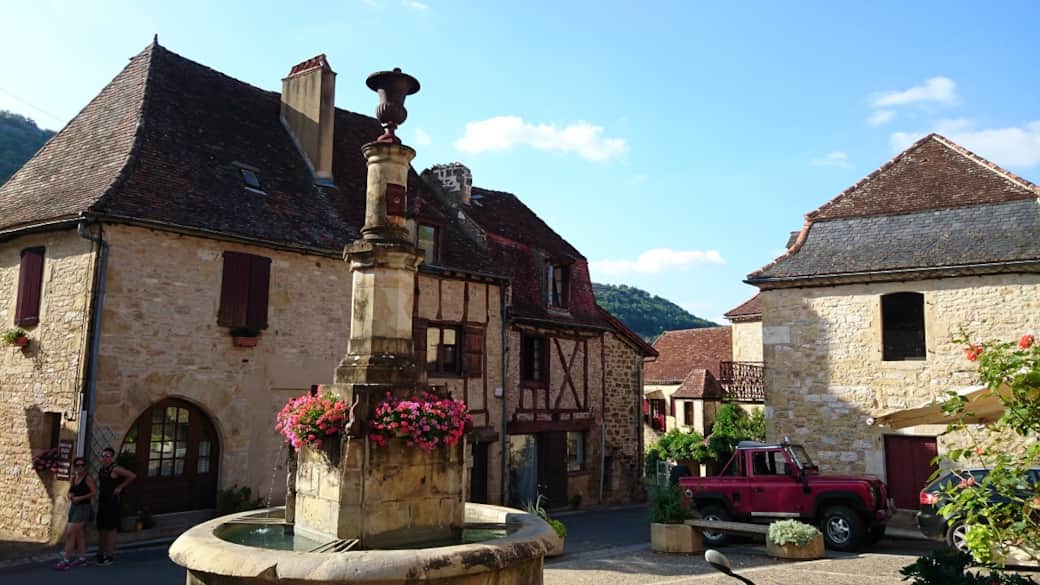
There are several castles and a manor house to see, including the Chateau de Limargue on the photo to the right. The 12th century church of St Pierre has a particularly simple and harmonious interior.
The village boasts two restaurants, one of which has a terrace looking out on to the superb views from the village.
St Cirq Lapopie
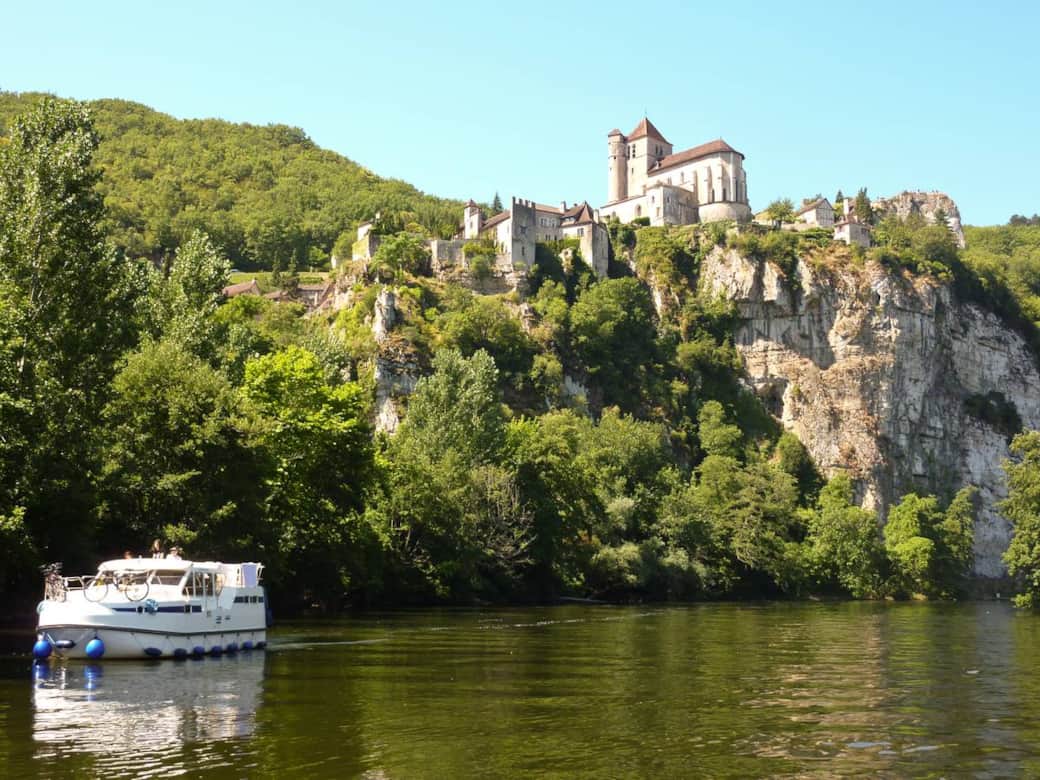
The medieval town of Saint-Cirq Lapopie, with thirteen listed historic buildings, is one of the most beautiful villages in France. Perched on a cliff three hundred feet above the river Lot, St. Cirq Lapopie is one of the most important sites in the Lot Valley.
Chief town of one of three viscounties of Quercy, Saint-Cirq Lapopie was divided among several feudal dynasties in the Middle Ages whose dominant families were the Lapopies, the Gourdons and the Cardaillacs. As a result, several castles and fortified houses were built, each ever stronger, dominating the feudal village.
Below the fortress, the village of St Cirq, enclosed by fortified gates, includes many beautiful old houses whose facades of stone or wood were built between the thirteenth and sixteenth centuries. They are characterised by their steep-sloped, flat tile roofs.
In the streets, open arcades of shops preserve the memory of craft activities that created the wealth of St. Cirq. Skinners in the rue de la Pelissaria, coppersmiths in rue Peyrolerie and especially wood turners, with workshops producing button moulds, bowls, cups and cooper’s taps.
At the foot of Lapopie, mills, dams, ports, locks and a towpath evoke the glorious age of river commerce. Take a boat trip and admire the view of the town from the river.
Capdenac le Haut
Only 4 kms from Figeac, this village in which every stone exhales a breath of the Middle Ages was once the oppidum (hill fort) which was the scene of Caesar’s final battle against the Gauls. The roofs are magnificent. Three types of material and three colours make up the village roofs – Flat tiles, lauzes (stone slabs) and pantiles. Make sure to bring your camera!
Cardaillac
As you enter the village pay attention to the sign in French that tells you to ignore the urge to walk straight into the village centre. Instead take the steep track to your right that turns into a path underneath the cliff on which the village is built. This is useful to see why this naturally defensive position was chosen for the village.
The village is divided into three parts: the original village that developed in and around the medieval fort; the area around the church; and the region around Place Marcadiol and the medieval garden. While all the parts of Cardaillac are interesting and deserve to be explored, it is the part around the fort that contains the most buildings of interest. You enter Cardaillac from below and discover a medieval centre that includes several stone towers, a myriad of picturesque houses (some of them half-timbered) and the Chapel of Saint Thomas.
It is possible to ascend the Tour de Sagnes for views across the rooftops and valley. This square tower was once part of a 13th century fortress, as was the nearby Tour de l’Horloge. You can also see the well that was once the main water supply for the village and fort in Place Manganel.
After leaving the fort, elsewhere in Cardaillac you should also visit the small medieval garden with a pleasant picnic area and the cluster of houses around Place Marcadiol.
Note: when you are leaving the village be sure to first follow the road below the village that looks back at the fort from the other side of the valley and has the best view of Cardaillac and its clifftop position. There is a weekly market in Cardaillac each Sunday morning.
Accommodation
So come stay at Las Vignotes de Lea and enjoy the quiet splendour of the most beautiful villages in France.